You are SO archetypal!
Research, Science, Philosophy, Jungian Psychology, Human Design
You are SO archetypal!
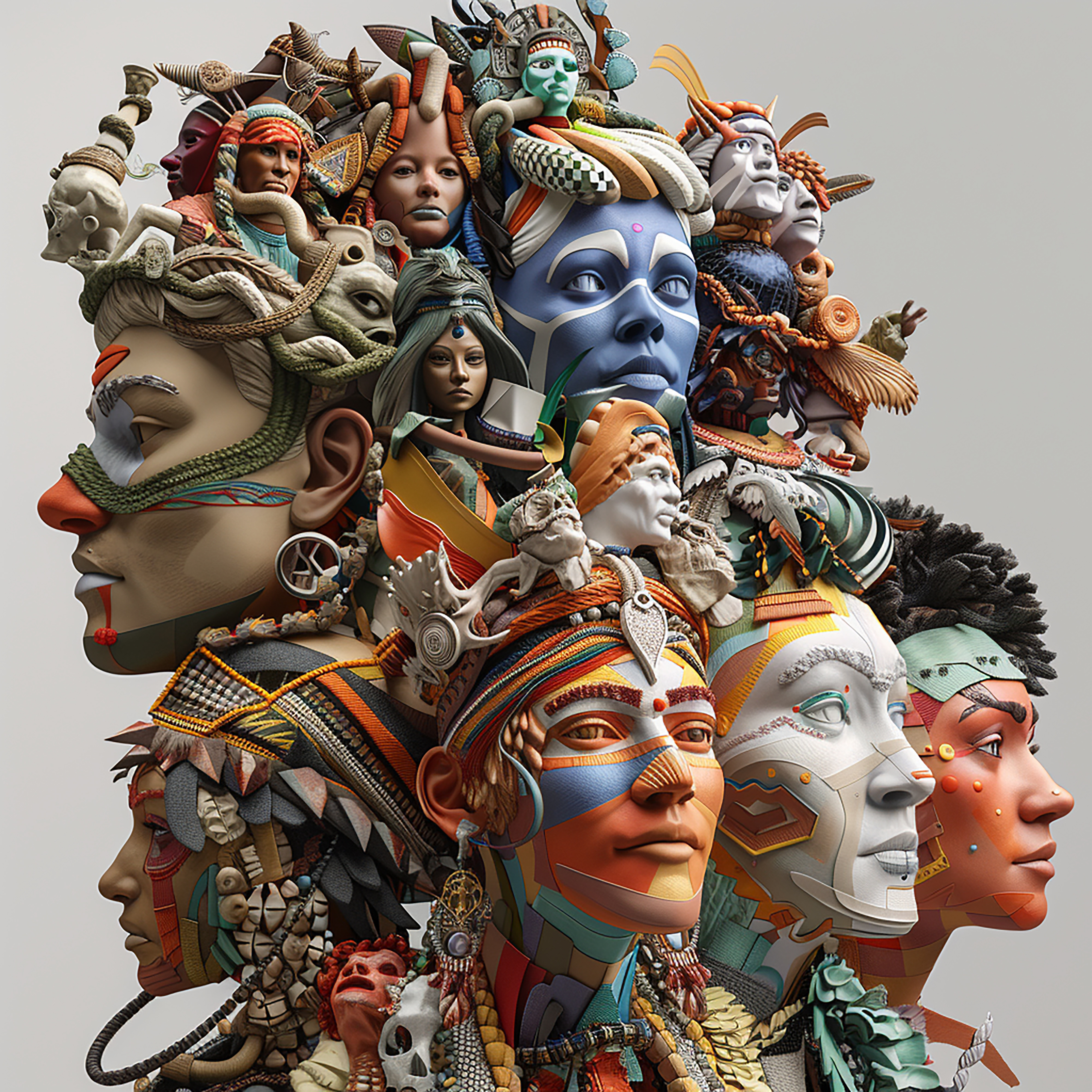
In the Kabbalah, and also depicted in the Old Testament, Adam’s primary role within the Garden of Eden was to give every animal encountered a name, based on the essence of their spirit that connected them to their life source, essentially linking the physical Earth with the spiritual realm. It is further interpreted that Adam did not invent their names; rather, Adam identified their names as divined from the spiritual DNA that the animal represented and embodied by their very nature of being. Thus, Divine Inspiration was also born.
Humans have long told stories to describe their human experiences from drawing on cave walls to carving designs on rocks to verbalizing legends and myths into our night sky, passing down lore, sacred geometry, and the study of the stars around camp pyres and community hearths for as long as fire has been wielded. Many indigenous cultures around the world used animals as divine teachers and familial relations, further epitomizing and giving symbolism to their characteristics as personal values and life lessons with which humans could identify and relate to their own experiences. In Egypt, hieroglyphs often depicted animals as sacred and divine beings, aligning their characteristics with those of gods and goddesses. These symbolisms were also made manifest in the study of the night sky, as star patterns appeared as “shapes” to which ancient humans further applied personas and god-like characterizations, cementing their myths, legends, and parables into the stars as well as their familial embodiment. Every planetary object that was visible by the naked eye had a name, a description, and a compilation of human traits to name it with a persona.
In other words, Archetypes.
The idea of personifying and stereotyping a series of inter-related traits into a caricature is as old as the Earth spinning within the Cosmos itself, because the very idea of an archetype is literally written into our world history in story-form. Every animal and planetary object was given a divine story, and with that story comes an inspired and sacred personification of the expanse of the human imagination. Plato, the Greek philosopher, transmuted the personification of sacred animalistic traits into what are commonly called Forms: an idealistic, non-physical essence that represents the true nature of something previously named in the natural world. In Plato’s case, these were also timeless and Universal - in other words, they were ubiquitous to the human experience, though their physical manifestations were imperfect, mere shadow forms of the more spiritual expression existing. This perspective is one of the earliest documented forms of an existential differentiation between sensory experiences being different between individuals while still ensuring an idealized, universal collective unconscious.
But long before Plato, in China, a different yet similar archetypal structure was designed. I-Ching, also known as the “Book of Changes”, is an ancient divination system developed by combining yarrow stalks in such a way as to depict not only a system by which humans can observe what kind of moment they are in the midst of experiencing, but also how to look inward to understand the human potential for flowing with the change presented. Yang, the unbroken line, represents creative, active, light and initiating principles while Yin, the broken line, represents dark, yielding, receptive and completing principles. By stacking three broken or intact stalks together, they merge and form the trigrams - eight fundamental archetypes that represent a natural force and a quality of energy. These trigrams are then combined in such a way as to define the 64 hexagrams; a language, if you will, for the completed vocabulary of self-reflection, balance, and flow with the natural and divined energy patterns of the human experience within the physical world.
In more modern times, the transition from divination practices, prayer, and philosophical literary study then shifted towards psychology, heralded by Carl Jung, when he formally developed his theories on the collective unconscious as a feature of humanity itself. The founder of analytical psychology, Jung transmuted the previously animalistic archetype models into those more relatable to commonly associated human-based personas: The Warrior, The Mother, The Sage, The Orphan. However, Jung did not stop there! He also correlated the collective unconscious, as a Universal nature of the human experience, to archetypes as the “language” by which it is best to describe any particular pattern of human-based instinctual behaviors, and then coined the term, “individuation” - the lifelong process of integrating conscious and unconscious aspects of the psyche to achieve wholeness and self-realization.
All of this is to say that an archetype is nothing more than a way by which humans group together common traits, emotions and behaviors into a collection of universal qualities that have a relatable, descriptive name. Archetypes are then used as a narrative technique to elicit those emotions and behaviors in the mind as a way to give moral grounding to the stories we tell.
Bringing this concept back into Human Design, the story of who WE ARE, as individuals within the greater collective of humanity is jam packed with Jungian archetypal language and ancient symbolism. The Types and the Profiles described are nothing more than descriptive characteristics of personality traits centered around a main character, being YOU. The Centers and Gates leverage I-Ching (and the Hindu Chakra System - but we will get to that more in the next blog post, “Somatic Semantics”), where each gate aligns to one of the hexagrams that articulates an expression of potential flaws and talents inherent within the human experience. The Channels articulate the flow of energy, interconnecting our sensory experiences felt across the body as physical sensations related to that human experience, while your Inner Authority is the pathway to healing.
In other words, YOU are the main story of YOUR life, flaws and all. And YOU are having a very HUMAN experience! Human Design is the methodology by which ancient systems for categorizing human qualities are articulated into archetypes so that we can fully understand how our experiences in this world intersect with both the physical AND the potential for change.
Of personal note on the topic of Archetypes and how else they are used
At this juncture, it would be prudent to also mention that since Carl Jung’s studies on the human psyche, many other systems and methods of categorizing personalities into archetypes have been developed; however, many, if not all of these, suffer from a lack of solid scientific foundation, due to the highly subjective methodologies by which YOU, the observer of your own life, complete a self-assessment. Depending on the emotional or physical circumstances and timing of when any of the most commonly known assessments are completed, results may vary wildly. Further, it is worth noting that these assessments, while they may have their merits for self-evaluations, have been accosted by Corporate cultures and Human Resourcing departments as a way of triangulating both successful team dynamics and identifying problematic employees under the guise of “collaboration”. In other words, “Here are the individuals that could comprise a successful team, thus yielding higher returns on my investment, and here are the stand-outs that may pose a problem, long term”. It is helpful to name the systems that attempt to bastardize the human condition all in the name of making money, while also pointing out that a fundamental issue in all of these assessment models is that they overlook motivations, values, morals, hidden biases and the working styles of the humans assessed. In other words, while they may name the personality traits, they lack the element of the human experience that has shaped and conditioned the societal masks that we wear and the foundational principles by which we operate as a collective. I'll add that artificial intelligence has now further blurred the lines of professional evaluations, skewing results toward the innate biases within the very models upon which humans are being assessed.
Humans need humanity and our shared experiences to transcend the politics and technology of today.
(Why Human Design Series, Post 5 of 6: Next Up! Somatic Semantics)