What A Warm Fuzzy Means To Me
Musings, Human Design, Epigenetics
What A Warm Fuzzy Means To Me
When I was seven, I won a writing award. The topic was what a warm fuzzy meant to me. Many kids submitted stories of teddy bears and snuggly blankets, but I wrote that my warm fuzzy was a great, big hug from my grandmother. I recalled how nice she was, what we did together when I would sleep over, and how she taught me things I really enjoyed learning. At the same time, my grandmother suffered from alcoholism, depression, and issues with her own self-worth, having both grown up in an orphanage during the Great Depression and been divorced by my grandfather after he cheated on her for several years.
My grandmother, flattered that I wrote a story about her and then proud for my having won for the topic I chose, took a copy of my writing submission, along with a picture of me lying across her front lawn, and framed them together. Ironically - as my parents may not have had much but they certainly did have a sense of humor - the sweatshirt I am wearing in the photo was one of the most famous of its day: red, covered in white sheep except for one black sheep that stood out over the left breast. Princess Diana made this outfit iconic, often noted in the news rags at the time as being symbolic of her feeling like the black sheep of the royal family. My grandmother also often felt like a black sheep, having been left behind by her parents, her husband, and often the people she loved the most in her life due to addiction.
A “Warm Fuzzy”, in this instance, was my first introduction to describing an archetype. If I were to assign a flower to her instead, I would be hard-pressed to decide between two flowers that grew in her yard: the tiger lily and the lily of the valley. On the one hand, the tiger lily is considered vibrant, confident, and magnanimous as it stands tall, shining brightly in the late July sun, but is not fragrant. My grandmother had moments when she was like the tiger lily - vibrant, feisty in her quirks and mannerisms, quick-witted and clever with double entendres buried with hidden sarcasms and dry humor. Conversely, the lily of the valley was quite odiferous, emitting a beautiful, delicate yet strong scent for such a small, white, bell-like flower, drooping down by its very nature as it bloomed prolifically in the moist shade in May. Similar to the lily of the valley, my grandmother had a deep, dark side, sometimes cloyingly sweet to overcome her emotional fragility that lay just beneath the surface and scent of bourbon in her mint iced tea.
When I was sick and had to stay home from school, I would often get dropped off at her house to watch Bob Ross paint happy little trees, Mr. Rogers interact with his neighborhood pals, and then her “Soaps” - she was not to miss a single episode of her daily dramas, a lovely distraction from whatever darker emotions lay within. But those would come out as well, like the time she had me sleep over and then kept me up until two in the morning, playing old vinyls of a trumpet-playing cousin of hers, and lamenting her miserable childhood. Often, she was taken out of the orphanage for weekend jaunts by wealthier family members to the beach and was showered with toys and attention, just to be dumped back at the doors of her childhood prison, stripped of her weekend prizes and punished for looking joyful. The indignity of a time when wealthier relatives only extended their graces as far as their sense of charitable good would allow was as obvious as her comments about the collection of silver spoons she was gifted by these same relatives on her birthday every year - “I was the orphan with a silver spoon in my mouth.” As an adult, I often find myself repeating other little quips of hers that used to befuddle and confuse me, now old enough to see the wisdom in telling a child to “sit on the floor and let your feet hang over,” or in saying “home again, home again, jigged-y-jig” when I pull in the driveway.
I look back on these memories through the lens of Human Design and one concept stands out: the idea that we can hold generational pains and traumas in our DNA. Epigenetics is the study of how our environment and lifestyle can influence the way in which genes are expressed - switched on or off, or turned up or down, for example - without rewriting the genetic code itself; specifically, around how trauma can leave lasting biological markers that transmit across generational lines and can be “activated” under the right environmental conditions. In 2017, a study on roundworms found that a change in temperature altered how their genes were expressed, and that the change was inherited over several generations - a whopping 14 generations, to be precise! Other studies were already finding intergenerational epigenetic changes in humans, such as in the adult children of Holocaust survivors.
In 2025, a study was done to understand the psychological and epigenetic adaptations that occurred in third- and fourth- generation descendants of Holocaust survivors. It seems that the imprint of trauma can be passed down through distinct DNA methylation patterns in human genes; however, as much as the later generations do exhibit a heightened reactivity to stress, these same subjects also hold greater indicators of psychological strength and resiliency in the face of adversity! So, while many of us may have ancestors that survived a wide range of suffering such as starvation, imprisonment, slavery, abuse, war, or witnessing genocide on a massive scale, what also has survived is the potential for our collective tenacity to end massive human suffering of this nature and end generational traumas being passed along to our own future grandchildren.
From an energetic mechanical perspective, Human Design looks at this through the lens of conditioning. We are all imprinted by our parents’ behaviors, belief systems, and traditions that have shaped who we think we are supposed to be, and we also inherit energy patterns from our ancestors - primarily our grandparents - including transgenerational trauma, which tends to show up in our stress responses and how we make choices in life. Certainly it is easy to imagine I inherited my grandmother’s love of lilies and, perhaps, her markers for alcoholism right along with them. But just because I have a genetic marker does not mean that the theme of that genetic marker MUST be activated. Hereditary factors are not deterministic life sentences.
We can shift our future. We can hold the potential for our darker, more visceral side to be expressed just as much as we hold the potential to overcome ourselves. With Human Design at our disposal, we can be even more aware of these themes within ourselves and make different choices. We can double down on our resiliency as human beings to overcome the past and paint a better future - not just for ourselves but also for our future generations. When we take back control of who we are, we get the opportunity to rewrite our personal stories AND our DNA expressions to honor the generations that came before us and improve the lives of those who come after. Further, we can wield our tremendous creativity to channel our inner struggles and darker proclivities into something artistic and beautiful, building resiliency along the way, with a deeper and more profound purpose for the honor and ancestral memory of those that came before. We can heal in both directions, both releasing the pain and suffering of our ancestors at the same time we end the future pain and suffering of our children and grandchildren yet to exist.
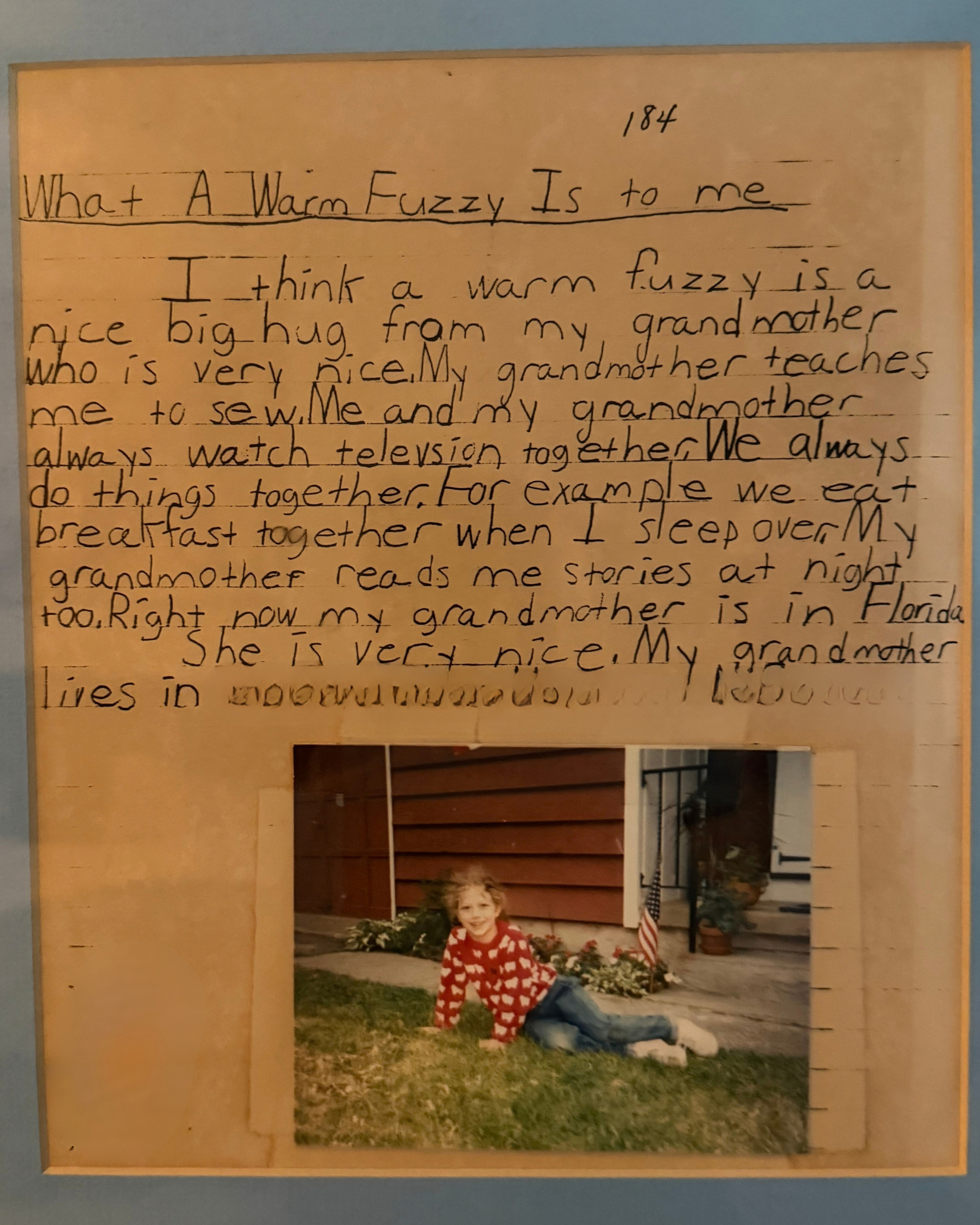
My grandmother framed a seven-year-old’s story about her tremendous hug and kept it all those years, yellowing and aging with the passage of alcoholic relapses and other health scares for her, and my leaving town due to college, an ex-husband, and escaping my own shadows on the East coast. Despite everything, though, she was one of the kindest ladies, even through her ills. On her deathbed, the last words she spoke to me were, “Thank You,” to which I replied, “That’s what we do, right? I take care of you and you take care of me.” She nodded as I left, passing away 24 hours later. When she passed, my cousins shipped me that picture frame and her silver spoon collection as part of my inheritance, both now hanging in prominent places in my home. Of everything I may have inherited from her, the story of how she overcame her beginnings and ended her life surrounded by those who loved her is what mattered. All we have to do is express a little DNA.